In this guide
- Begin with the purchase you can see
- Separate the parties
- Give a useful boundary
- A customer can have two questions at once
- A hypothetical counter conversation
- Avoid treating the card name as a diagnosis
- Record the next step
- Keep the brand claim narrow
- Reusable work card
- Sources and scope
- Continue with a different task
Define the merchant’s useful role without pretending to administer a Corpay Prepaid card account.
Begin with the purchase you can see
A customer may call a card Fintwist while current public provider material uses Corpay Prepaid. That naming context can help staff understand the conversation, but it does not give a merchant access to the customer’s account. Start with the sale, order or service record the business controls. Ask what the customer wants clarified about that purchase.
Separate the parties
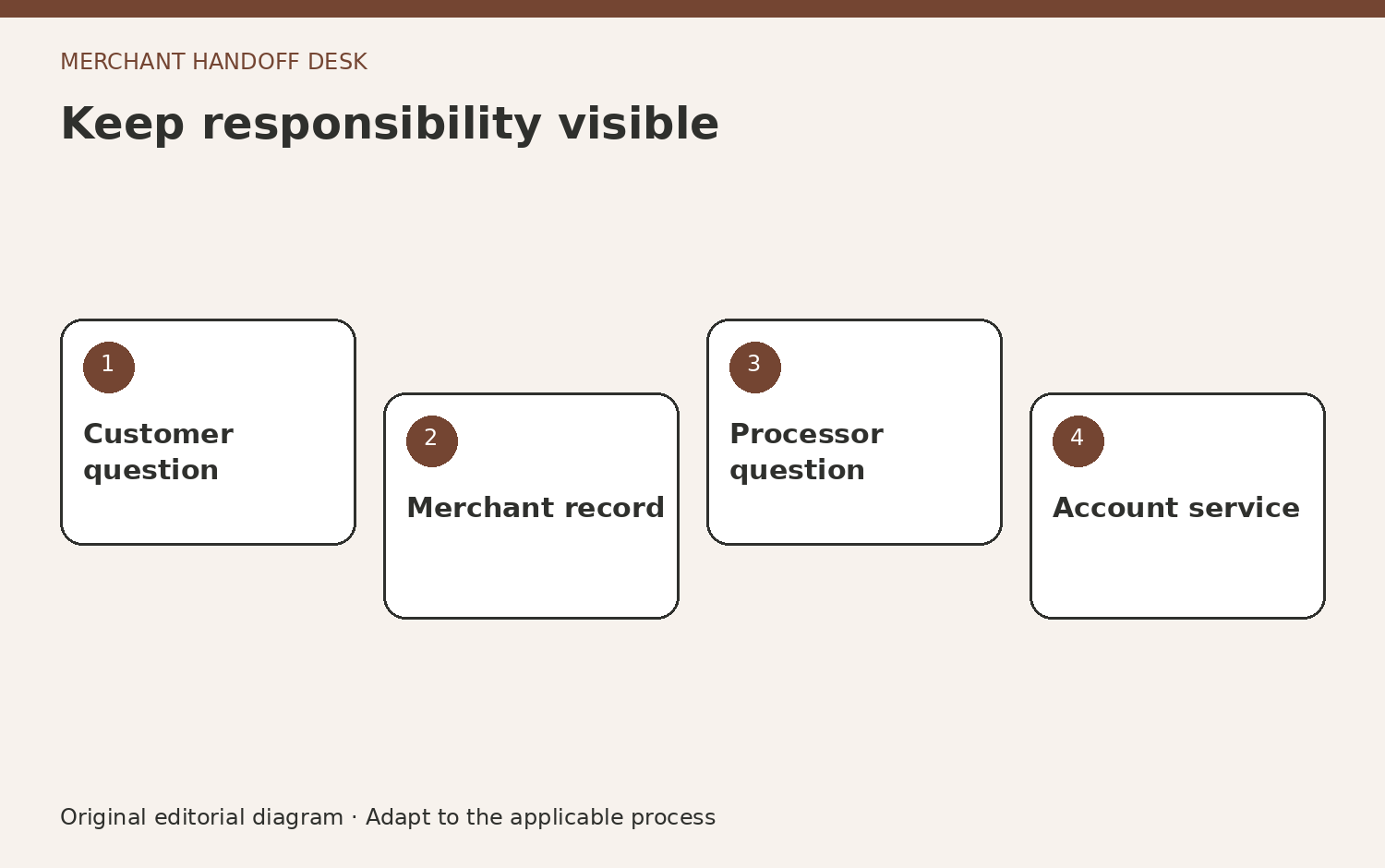
The merchant can explain its order, receipt and actions taken through its approved payment system. The acquirer or processor supports the merchant’s payment setup. The issuer or designated cardholder service handles the customer’s account. The FTC’s basic role descriptions are useful context; they do not replace the merchant’s current service arrangements.
Give a useful boundary
Do not simply say “call your bank” when the business can first provide a clearer receipt or confirm whether it initiated a refund. Equally, do not promise to unlock the card, confirm the customer’s available balance or decide an account dispute. Explain what you can establish and what remains for the official cardholder channel.
A customer can have two questions at once
A purchase complaint may involve both a merchant issue and an account concern. For example, the business may need to explain an incorrect order total while the customer separately asks why an account entry looks different. Do not force the whole conversation into one category. Give the merchant issue an owner and provide the appropriate evidence for the account question. A handoff should not erase work the business still owes. Equally, the merchant should not claim that correcting its order record automatically resolves every account consequence. Keeping both questions visible produces a more complete service response without expanding the merchant’s role into account administration.
A hypothetical counter conversation
A customer says a purchase looks wrong in their account. Staff can locate the merchant receipt using the business’s approved lookup process and compare the sale amount. They should not ask the customer to reveal a password or hand over an unlocked phone for browsing. If the merchant record does not explain the concern, provide the relevant receipt and a precise statement of the merchant’s action.
Avoid treating the card name as a diagnosis
A customer may use an older name, describe a network logo or simply say payroll card. Staff can clarify enough to identify the relevant official cardholder route, but the name alone does not explain a declined purchase, unfamiliar amount or delayed credit. Start with the merchant evidence and the actual question. If the business needs processor advice, use its approved support relationship. Do not search for a convenient internet explanation and present it as the cause of this transaction. General provider and network sources help define the boundary; they do not replace a checked record of what this business did.
Record the next step
Use the business’s approved case reference and note the question, checked merchant record and responsible staff member. Keep card credentials and unrelated account history out of the service note. The customer should leave knowing what the business will check and what it cannot determine.
Keep the brand claim narrow
This publication is independent of Corpay, Fintwist, Mastercard and card issuers. It does not provide a Fintwist merchant portal or payment-processing instructions. The practical methods here are original service-documentation suggestions to adapt within a merchant’s actual policies and approved systems.
Reusable work card
Use these prompts in your organization’s approved process. They request no private account information and do not authorize a payment or account change.
- Locate the merchant-controlled sale or order record before asking the customer for account information.
- Identify whether the unresolved question concerns the purchase, the merchant payment system or the card account.
- Explain what the business can establish and what only the appropriate official account service can determine.
- Use the approved customer-verification and record-supply process without collecting credentials or browsing a private phone.
- Record a neutral reference, checked evidence and next owner in the authorized service system.
- Provide a bounded finding that helps the customer continue without implying the merchant opened an issuer dispute.