In this guide
- Two records can describe one purchase
- Compare the right fields
- Protect the customer copy
- Check which version of the order the receipt describes
- A hypothetical missing-item question
- Do not make a customer receipt into an internal report
- Explain the evidence without jargon
- Close the information gap
- Reusable work card
- Sources and scope
- Continue with a different task
Explain why a product order and a payment event can answer different customer questions.
Two records can describe one purchase
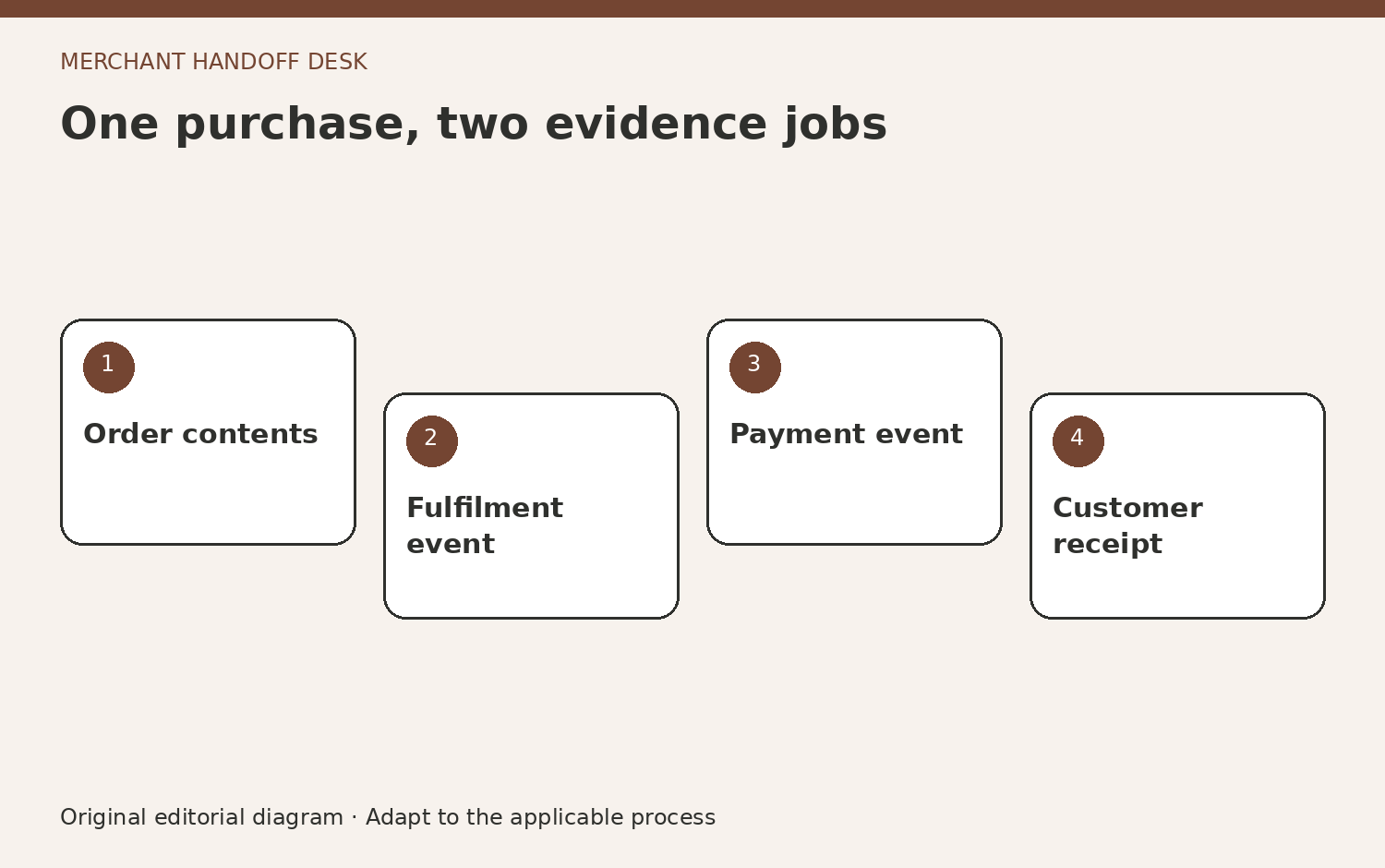
An order record explains what the customer bought and how the business fulfilled it. A payment receipt records a payment-related event in the merchant’s system. Neither should be casually substituted for the other. When a customer asks about a Fintwist or Corpay Prepaid purchase, staff should identify which record answers the actual question.
Compare the right fields
Within the approved system, compare the order reference, amount, currency, date and merchant status. Do not assume the order number is the same as the payment reference. If multiple payment events exist, label them by their actual system meaning rather than guessing from a sequence of numbers.
Protect the customer copy
A receipt should be supplied through the business’s authorized process. Historical FTC guidance highlights the risk of exposing full card details on customer receipts. Staff should use approved masked records and escalate unexpected exposure to the business’s responsible owner rather than creating a new unreviewed screenshot.
Check which version of the order the receipt describes
An order can change after it is first placed. An item may be removed, a service amended or a return recorded. A receipt associated with the original event may still be valid evidence of that event while no longer describing the whole current order. Explain the version or stage rather than labelling one document wrong simply because totals differ. The merchant should connect the relevant records under its approved workflow. This is especially useful when a customer forwards an old confirmation email that omits a later change. The business can clarify the sequence without needing access to the customer’s complete card history.
A hypothetical missing-item question
A customer bought three items but received two. The order record can establish fulfilment, while the payment receipt can establish the recorded amount. The missing item does not by itself prove a card-account error. Start with the merchant’s fulfilment and refund policy, then provide a clear record of any payment action actually taken.
Do not make a customer receipt into an internal report
Staff may be able to see more fields than a customer needs or should receive. Use the approved customer-facing record, not a screenshot of every internal payment detail. If the standard receipt is unclear, ask the responsible owner how to provide an accurate explanation safely. Historical receipt-truncation guidance is a reminder of the privacy concern, not a full specification for every modern system. The business’s current compliance and processor requirements still apply. The service objective is a readable, relevant record that establishes the merchant fact, not maximum disclosure of technical data.
Explain the evidence without jargon
Say which record you checked and what it shows. Avoid a technical status word without explaining what it means in the merchant’s system. If the business cannot confirm the final account result, state that limitation. A merchant receipt is useful evidence for the customer, not a guarantee about the issuer’s display.
Close the information gap
If the customer needs a duplicate receipt, use the authorized retrieval method and verify the requester as the business requires. Do not ask for full account statements just to find a sale. The desired outcome is a coherent purchase record with only the information necessary for the customer’s question.
Reusable work card
Use these prompts in your organization’s approved process. They request no private account information and do not authorize a payment or account change.
- Identify which question is answered by the order record and which by the payment receipt.
- Compare relevant amount, currency, date and references using the merchant’s approved system.
- Keep separate payment events distinguishable rather than assuming every reference is an order number.
- Supply approved masked receipts and escalate any unexpected exposure of sensitive payment information.
- Explain how fulfilment evidence and payment evidence relate without claiming an issuer-side outcome.
- Use the authorized receipt-retrieval process and avoid requesting unrelated customer account history.