In this guide
- An exchange can conceal several questions
- Create a linked record
- Keep policy and account questions separate
- Explain a zero net difference carefully
- A hypothetical lower-priced replacement
- Handle a missing original receipt through policy
- Give the customer a coherent explanation
- Review the training example
- Reusable work card
- Sources and scope
- Continue with a different task
Document the original sale, return and replacement item as distinct merchant events.
An exchange can conceal several questions
A customer may describe an exchange as a single event, while the merchant’s records include the original purchase, returned item, replacement item and an amount difference. Staff should explain the actual sequence used by their business rather than assume the word exchange tells the whole payment story.
Create a linked record
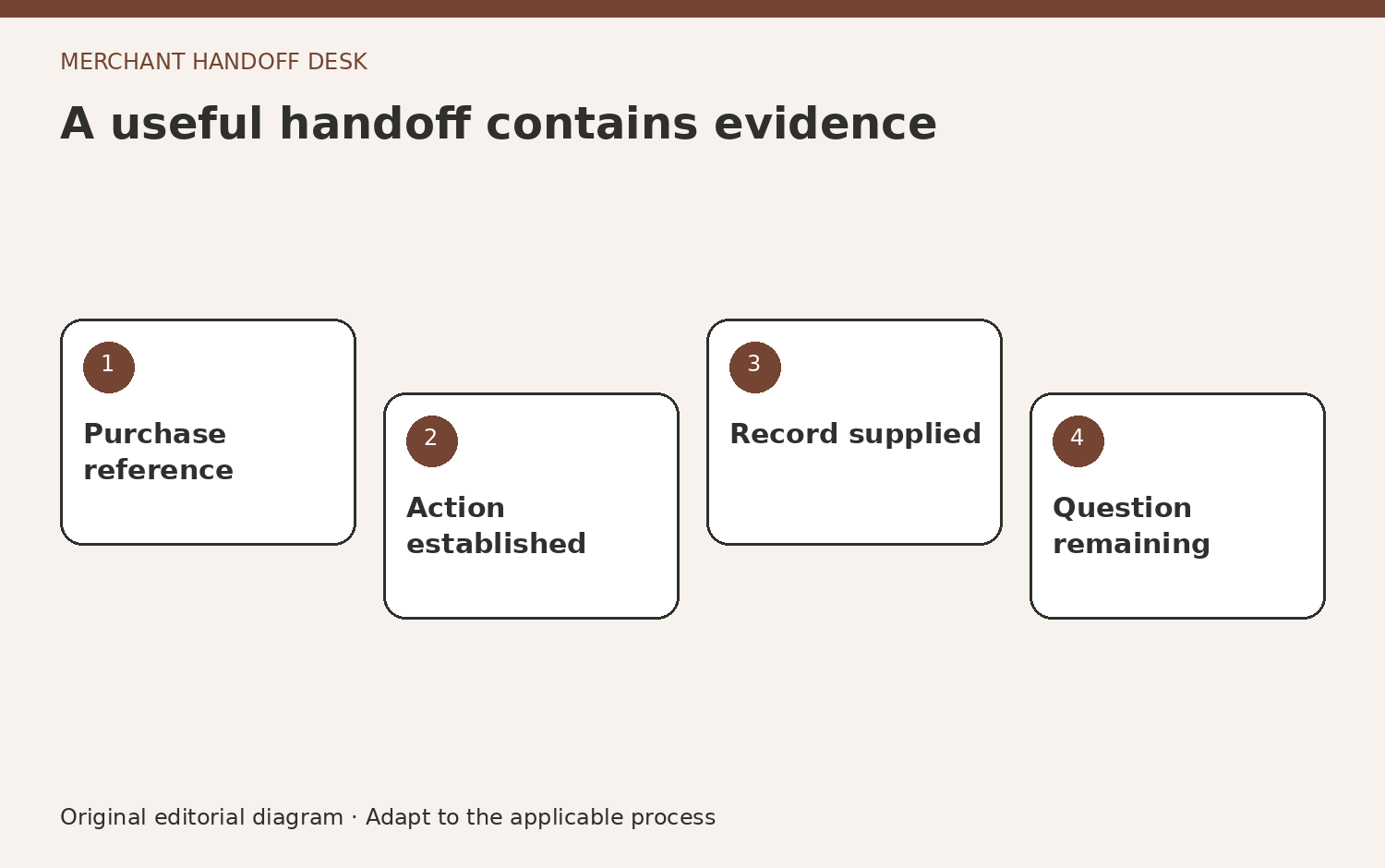
Use the approved order and receipt references to connect the events. State which goods changed and what the merchant system records for the difference. Do not combine numbers from separate records without checking that the amounts, currency and tax treatment belong to the same transaction context.
Keep policy and account questions separate
The merchant determines its return or exchange policy within applicable requirements. The card issuer handles account matters. A customer’s Fintwist branding does not authorize staff to infer special exchange rules or promise an immediate account result. Any processor-specific handling should come from the merchant’s current approved procedures.
Explain a zero net difference carefully
An exchange may leave the customer owing no additional amount, but that does not necessarily mean there were no merchant payment events. The business must describe its actual process and records. A zero net difference is arithmetic, not a complete transaction history. If the system records a return and a new sale separately, provide the permitted evidence that makes that sequence understandable. Do not assume another merchant uses the same method. For a customer checking a prepaid account, clarity about the merchant sequence is more useful than a casual statement that nothing happened financially.
A hypothetical lower-priced replacement
A customer exchanges an item for a less expensive one. The service note should identify the original sale, returned item, replacement sale and the action taken for the difference. If the business has not yet confirmed the payment action, it should not describe the difference as already credited to the card account.
Handle a missing original receipt through policy
A customer may have the item but not the original receipt. Staff should use the business’s approved lookup and return policy rather than inventing a card-account workaround. The merchant may have a legitimate way to locate the order, but that does not require browsing the customer’s app or requesting credentials. If the original payment method cannot be established under the policy, refer the decision to the responsible owner. Explain what the business can and cannot confirm. The goal is to preserve a reliable connection between the original sale and later exchange, not to force a convenient narrative from incomplete records.
Give the customer a coherent explanation
Provide the receipts the business is authorized to supply and explain how they relate. Avoid asking the customer to reconcile unexplained documents on their own. If the business used a different method under its policy, state it clearly and refer policy questions to the responsible manager.
Review the training example
Use fictional amounts and products when teaching this workflow. Do not copy a real customer’s card details into a staff guide. The objective is a readable purchase history, not a universal rule for processing exchanges or a claim that every merchant uses the same method.
Reusable work card
Use these prompts in your organization’s approved process. They request no private account information and do not authorize a payment or account change.
- Link the original sale, returned item and replacement item through the approved merchant records.
- Identify the actual action taken for any amount difference rather than assuming how the system handled it.
- Keep policy eligibility questions separate from issuer-side account questions.
- Provide related receipts with a short explanation that makes the sequence understandable to the customer.
- Escalate an unclear return method to the responsible policy owner before making a promise.
- Use fictional amounts and products in training so a service example does not expose real payment information.